Technical notesComputer Vision / AR / Game
The idea
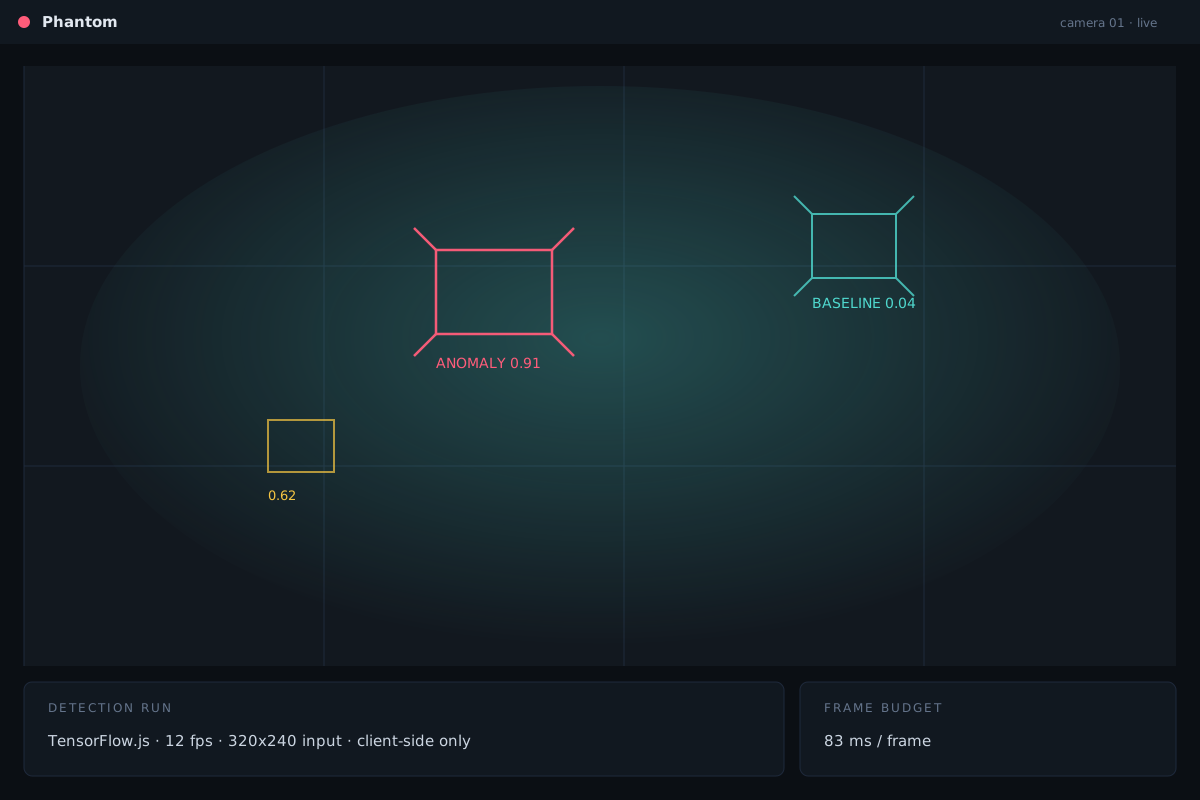
What the camera view looks like: detected anomalies get a box and a score, everything else is baseline.
Take any camera feed, run anomaly detection on it in the browser, and render whatever the model thinks is out of place as something you can walk around and investigate.
What I built
- TensorFlow.js inference running client side, so frames never leave the device
- Anomaly scoring tuned for ordinary rooms, where almost everything in frame is the baseline
- A React Three Fiber layer that projects detections into the scene as markers
- Fallbacks for browsers without WebGL, because most people open this on a phone
What I learned
Real time inference in a browser is a budget problem before it is a model problem. Frame rate dropped long before accuracy did, so most of the work was deciding what to skip.
Stack
TensorFlow.js, React, React Three Fiber, and TypeScript.
Availability
The code for this one is still private while I clean it up, so there is nothing to link to yet.